

everything i read in june
Consumption Diaries #36

In true Steph fashion, here I am posting my June reads well into July, praying that I've formatted this correctly on my phone because I am once again out of town!
June was hot, for much of the planet, which left plenty of time for lying very still and having a few existential crises about the state of things. And June felt incredibly long, even as I do that thing you do past 30 where at least once a week you marvel at how you blinked and half the year passed by. When I was putting together my monthly photo dump (my personal insta has been suffering from this for four years straight) I could hardly recognize the beginning of the month. Summer melts time.
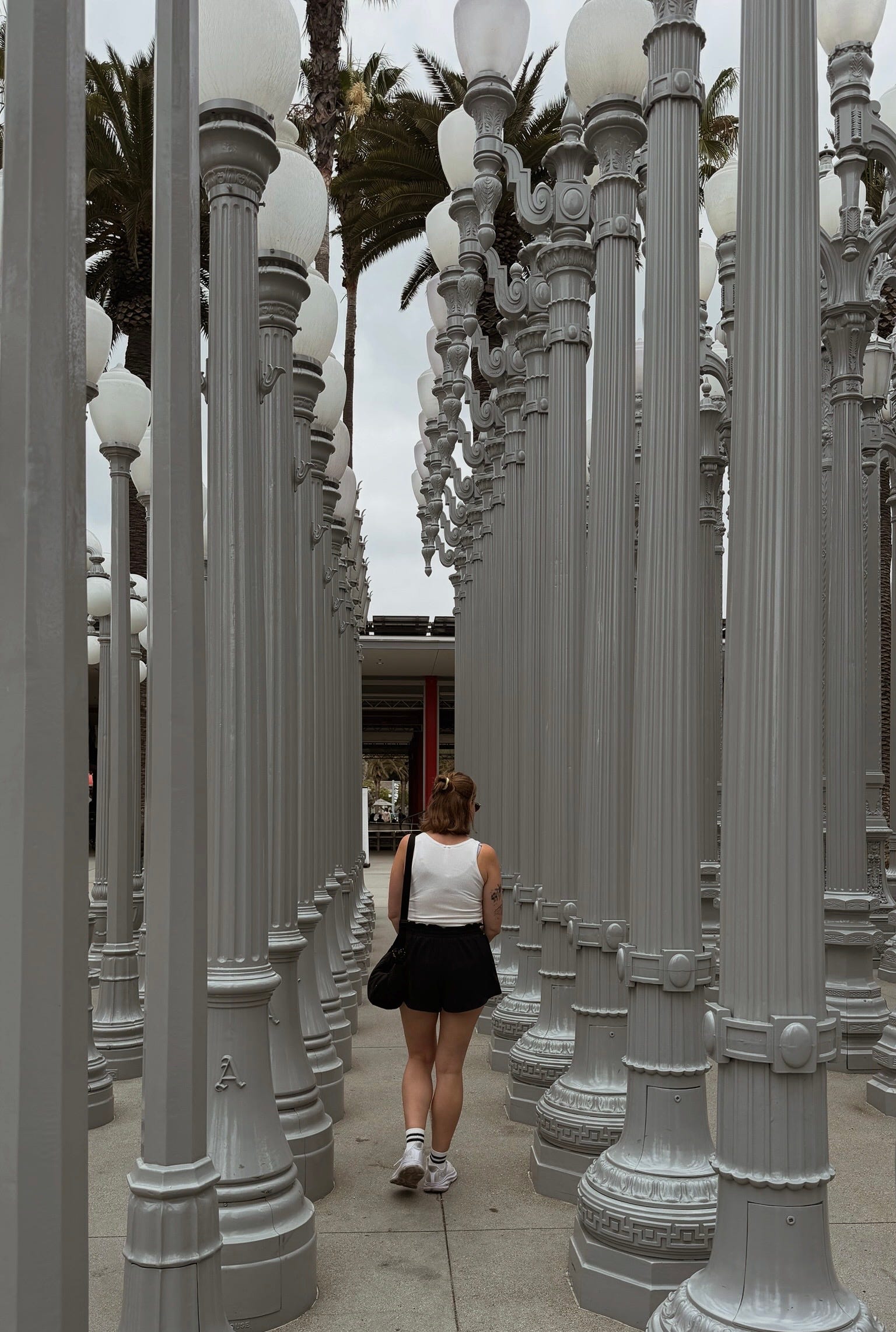
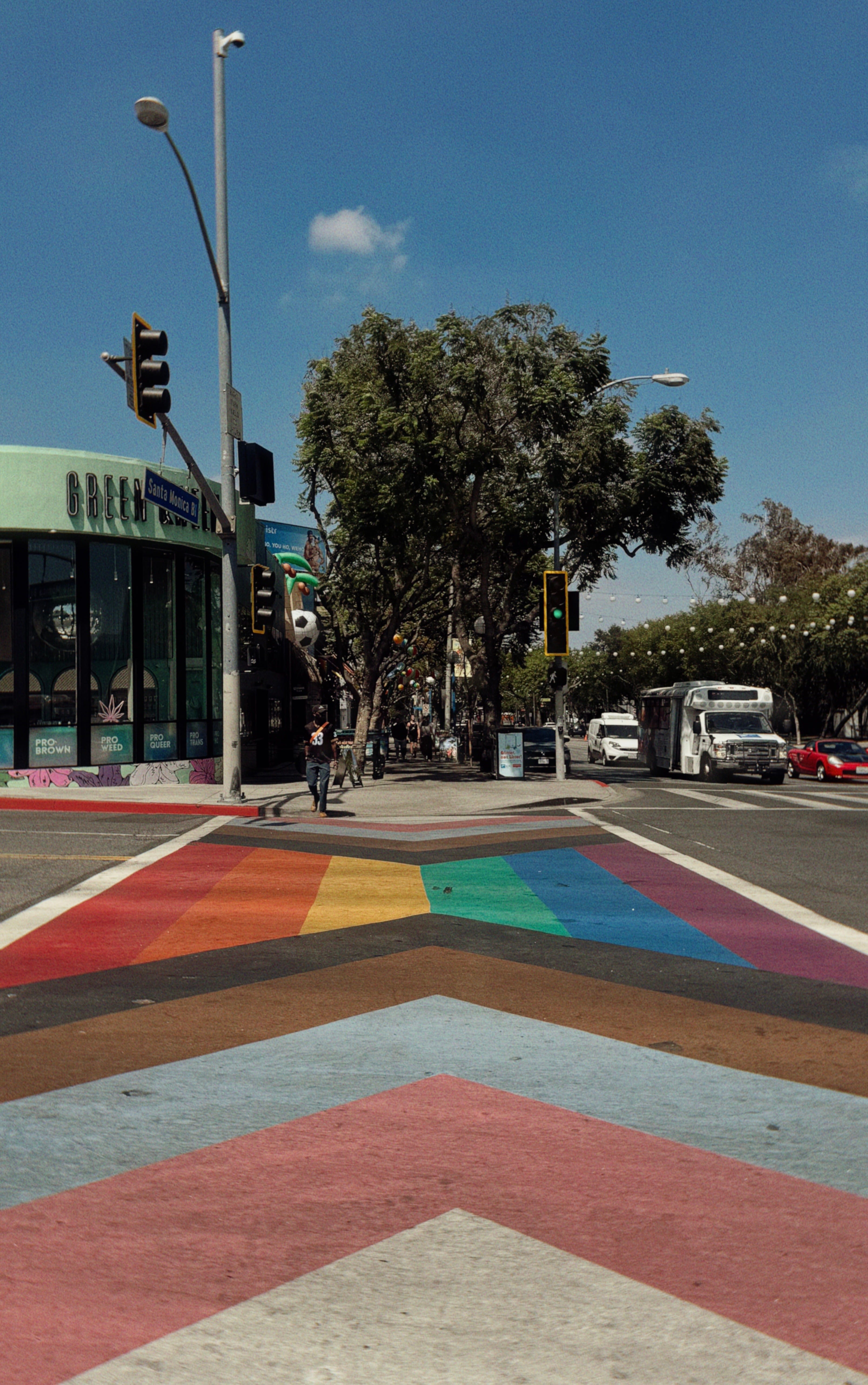
I also went to Philly and LA, the latter of which is responsible for several of my monthly favs below, I'm sorry to admit, because I've always half-joked that I don't really care for LA (I think it would swallow me) and I’m slowly changing my mind!
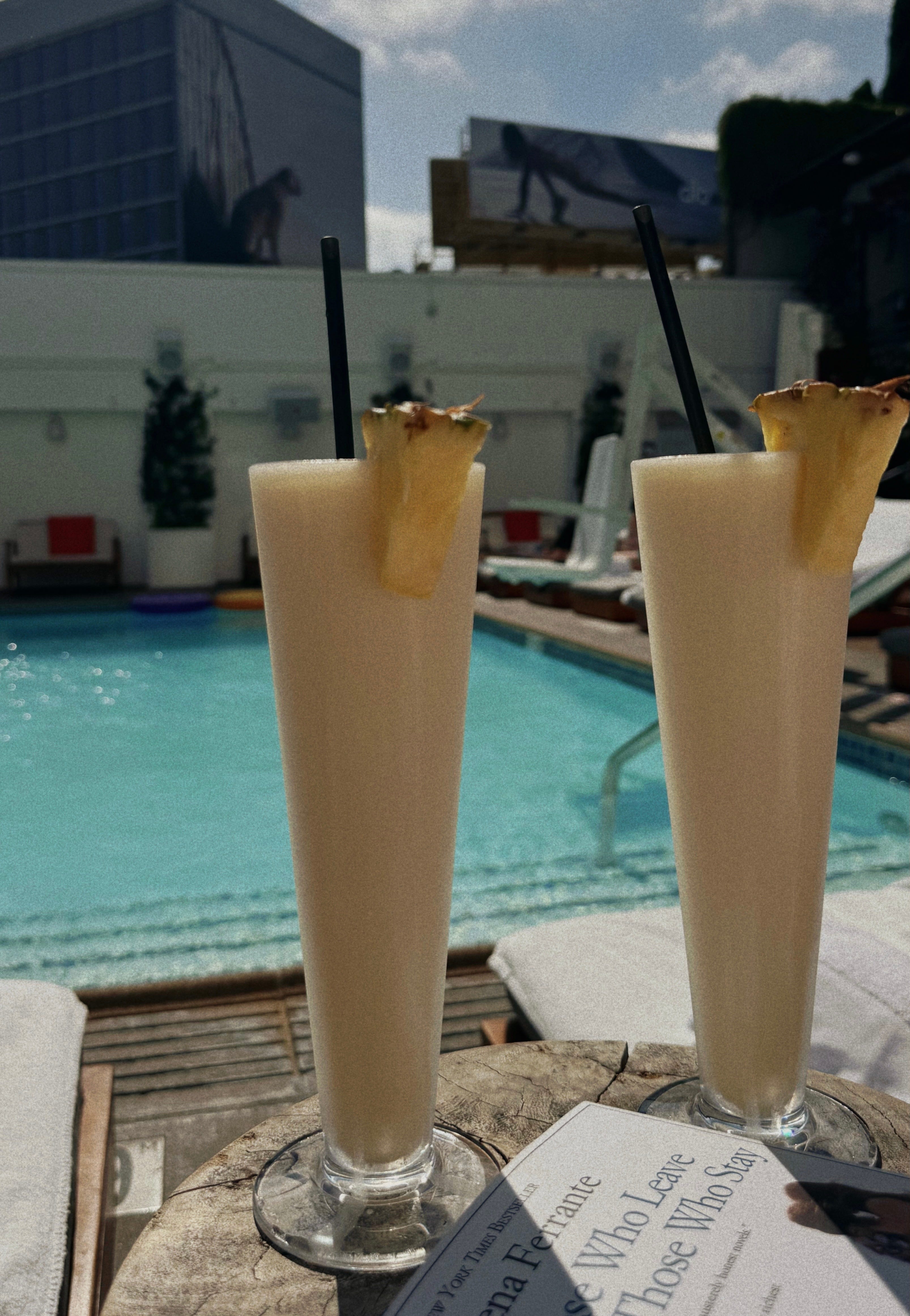
In June, my reading had more of a theme than usual: girlhood. And of course, summer doing its melting. I'm planning to explore this further in a separate newsletter, but to me, there's no better time than summer to explore girlhood. Of the five books I read this month, they nearly all made me feel apprehensive of any nostalgia i feel for my own childhood, warm and fuzzy and anxious all at the same time, and both a little worried and a little hopeful for the girls of today.
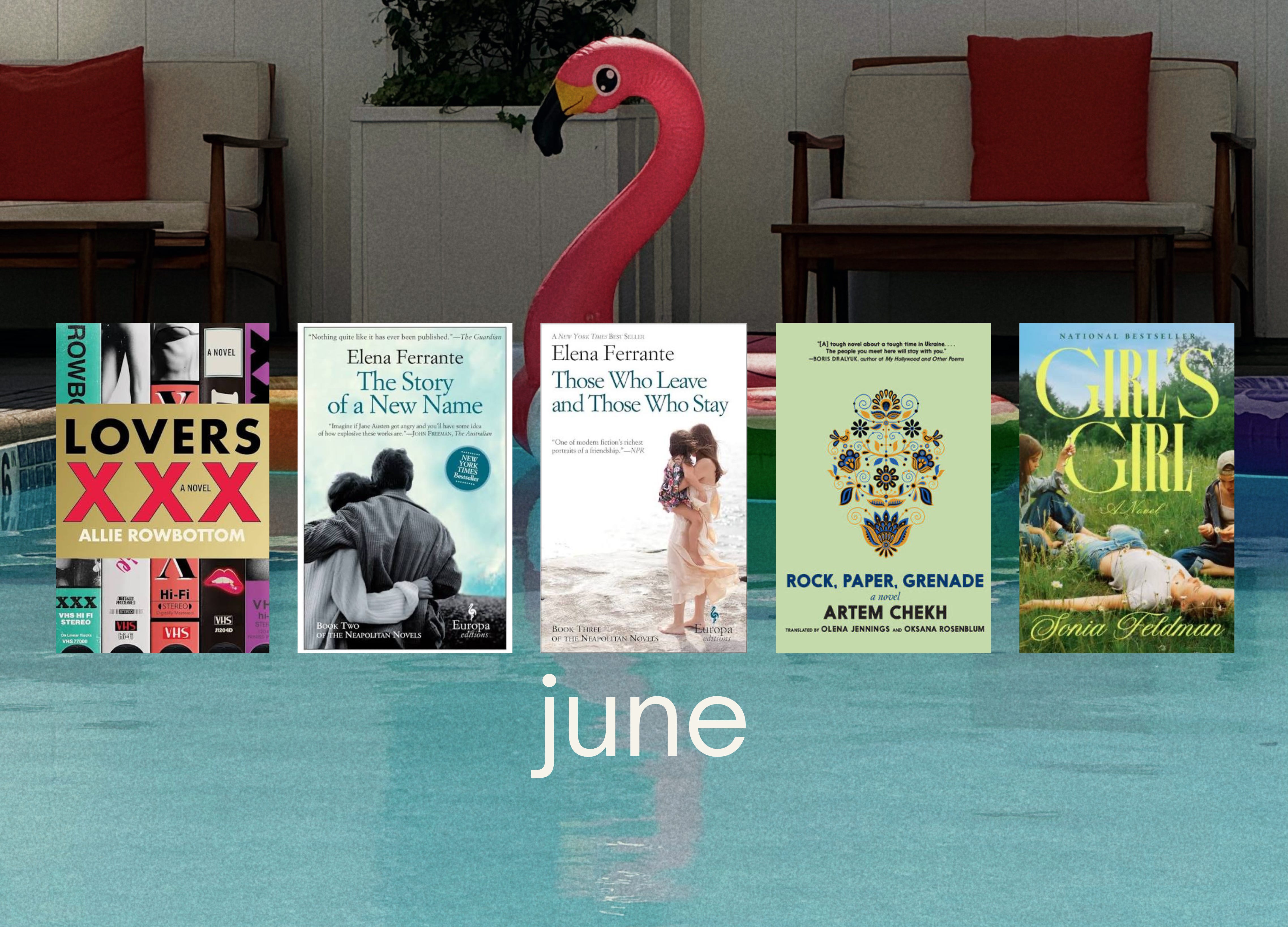
Lovers XXX by Allie Rowbottom
It’s the 80s in LA, and Jude and Winnie, eighteen, have run away from home with dreams of being writers. Smart, savvy, and inherently understanding of the currency of sexuality, they work at a strip club to keep themselves financially afloat until a series of circumstances both within and out of their control leads them to shooting hardcore porn. There, sexism, exploitation, and drug use fuel their frustrations and jealousy, straining their bond as they fly too close to the sun.
There is a deep sadness in Lovers XXX, fueled by exploitation and sexism, but never by shame. There wouldn’t be room for self-righteousness in a book like this, set during the hayday of the American porn industry, but it’s worth emphasizing that the author does not make moral judgment calls about pornography itself, or even ask her readers to.
The book’s second half is set thirty years after the disappearance of Jude; Winnie is newly divorced, and, mired by her own failed writing career, becomes fixated on finding Jude and writing their story. I found this timeline very entertaining; I couldn't put it down once I got to the second half, too curious about what happened to Jude. The fast-forward structure makes Winnie's half feel a bit more like a true crime novel — which I think was intentional, as true crime vigilante is exactly the vibe Winnie gives off — than a narrowly defined work of literary fiction. I think there's certainly room for both within one text, but there's a lot of conversation around the competing forces of genre and what defines each that I want to explore in my own reading habits.
Winnie as an older adult is almost jarring in contrast to the first half of the book, full of young and naive and hungry girls. Porn stars rarely make public names for themselves outside of porn, and aging as a woman is difficult enough in traditional Hollywood roles. Even amongst us normies, the value of a woman diminishes as she ages out of her sexual currency. The woman’s role in porn is merely a dirty reflection of her societal value.
It’s lovely, then, that Winnie and Jude refuse to surrender their girlhood to the men who destroy it. They aren’t strong or inspiring in a girlboss kind of way, and nothing about Lovers XXX is sending the message “look at these brave girls who got out of big bad scary porn.” They’re normal women, and that was more powerful to me than anything. All women are normal fucking women, no matter how beautiful or weird or flawed or taboo.
I've been thinking a lot about the genre of "women's fiction" (I know, bear with me) and how we value it when it's traditionally been defined by its contrast to masculinity. The stereotypically unserious, fluffy, and shallow books catered to women do exist, but it's unfair to slap a gender on them and brand them as lesser because of it. Obviously. There’s some room to reclaim the term women's fiction, though, and view it in a more serious, literary context: Novels that explore the issues and circumstances of women's lives.
You could tell me we don't need anymore labels for anything and I'd enthusiastically agree; who cares what the name of the genre is if you like its substance? But it's the stigma here that needs revisiting, not because all "women's fiction" books deserve more love but because many a substantial novel has fallen into the marketing pit of women's fiction and we've all suffered for it.
Anyway! I think Rowbottom's novels would be well-positioned to join the women's fiction revolution because she deliberately chooses taboo topics that directly and disproportionately affect women — in Aesthetica, plastic surgery and instagram face, and in Lovers XXX, porn — but does not leave the literary fiction camp either. I wouldn't be surprised if we see more lit fic by women about taboo subjects (just look at the popularity of Yesteryear this year or Detransition, Baby a few years ago) in the next few years, and I'll be equally unsurprised if Rowbottom is ultimately leading trends there too.
thank you to the Allie for sending me an early copy! 🫶
The Story of a New Name and Those Who Leave and Those Who Stay by Elena Ferrante, both translated by Ann Goldstein (Books Two and Three, The Neapolitan Quartet)
For Literhotties book club, we're doing an Elena Ferrante summer side quest, so I read the second and third books in the Neapolitan Quartet this month. I’m obsessed. I won't get into too many details about the second and third books for spoiler purposes (even though the moratorium might be expired, I think the subtle twists are part of the fun), so I'll ramble in the abstract instead, sorry!
When I read My Brilliant Friend a couple of years ago, it was with unfortunate timing: that New York Times 100 best books of the 21st century list that crowns My Brilliant Friend as the very best came out a mere two days before I finished the novel. Okay, sure, I told myself, but the best book? Of the entire century so far? I’ve never been one for favorites or bests, but that title created a chasm of understanding between the book and me.
As it turns out, I only needed the rest of the quartet to get it. I won’t get ahead of myself before I finish the fourth (though I’ve started it), but these books simply need each other. Not because they’re weak without the others to prop them up but because each has an entire tree-root system that expands beyond itself, making it impossible for me to untangle them from each other.
I’m not sure My Brilliant Friend was a good pick for best novel of the century for this reason, but it’s probably easier for me to say that as someone who doesn’t have a favorite anything and whose preferences are dictated fully by mood, and often capricious ones at that. I completely understand why the first book has captured the hearts of so many because the whole series has made it capture mine as well.
The third book takes place entirely in Lila and Elena's adulthood, which changes the tone as well. Elena is still self-reflective but with far less flagellation of her childhood self, and Lila becomes somewhat unknowable to us as readers because she is somewhat unknowable to Elena as our narrator.
And the third book also turns more political as the tension in the characters' lives is driven by fascism and increasing unrest. In the neighborhood, which has always felt isolated from the rest of Naples, the rest of Italy, and the rest of the world, exploitative power, held by the Solaras, is able to flourish as the need for self-governance and protection increases. (if you need an insomnia rabbit hole, the start of the mafia in Naples is good.)
I found Ferrante's seamless writing of the personal and political colliding to be mesmerizing — by the third book I was having trouble putting it down. And it also feels so realistic: we panic about the world and then we turn around and panic about whether our crush likes us back, or we struggle to keep up with the onslaught of news but have no issue holding onto juicy gossip. Ferrante understands that people contain multitudes, etc. etc.
Though this is fiction, it feels like I'm reading about the history of Italy's fascism during a significant moment in US history. The parallels, even if imagined or too simplistic on my part, jumped off the page. I'm in awe of Ferrante's ability to write complex stories with complex characters who hold differing but nuanced perspectives about their worlds. The unease of fascism permeates all of their lives, with varying degrees of self-awareness and response. I hadn't felt like the novels were particularly relatable to me other than my vague understanding that girlhood and womanhood often look this lonely — until the third book, when all the character building culminates in an extremely believable (and often frustrating) story set to the backdrop of a country on the verge of unrest and change. A book's relatability bears no weight on its merit for me, so I only say they weren't as relatable to me only to emphasize how beautifully the slow burn of this quartet comes together as something so quintessentially human.
Also: fuck Nino Sarratore. That's all!
Rock, Paper, Grenade by Artem Chekh, translated by Olena Jennings and Oksana Rosenblum
Rock, Paper Grenade is the outlier this month in themes of girlhood, though not necessarily in youth. It is a bildungsroman about Tymofiy, a Ukrainian boy who must grow up far too early, and Felix, a former soldier who tumultuously enters his life and provides a flawed, unstable blueprint for becoming an adult.
Beginning in the early 90s, Felix blows into Tymofiy's life as his grandmother Lida's sometimes-boyfriend and dips in and out just as quickly. He is haunted by his memories of the Soviet-Afghan war, an event Tymofiy and his peers only understand in the abstract but for whom the prevailing consequences are very real in a newly independent Ukraine. The novel follows Tymofiy as he drifts through the stages of boyhood, so unsure and unstable that he's often indifferent to life itself. It’s also an intergenerational portrait of the daily life of ordinary people in Ukraine in the 90s. All are uncertain of who they are meant to be, what's even possible to be, mirroring an entire national identity.
In the original Ukrainian, the title is Who Are You, a phrase Felix often screams in the throes of a PTSD episode or when drunk. This can be interpreted literally — Felix, in his stupor, does not recognize Tymofiy — or as an existential question: Who are you, really, as a person? Who do you want to be? It's devastating either way, particularly in the context of a country thrown into war and never quite healing from it, generational trauma accepted as a fact of life. For the characters in Rock, Paper, Grenade, and Tymofiy especially, it was never their war.
I've talked about this before with the novel I Will Die in a Foreign Land, but my family on my dad's side is Ukrainian. It doesn't feel like my identity to claim; we have very little of the culture left, just some foods and amusing tales of my grandparents, who refused to speak Ukrainian with their children and only slipped into it when they would fight. Whenever I read about Ukraine, even in fiction, I feel a strange sense of detachment in a different way than other things I read that also aren't mine and that I don't understand.
The personal aside, though, I think this is partially due to the fiction feeling like nonfiction. Sad books can be like that, and this book is sad, obviously. It couldn't not be. To me, the most devastating stories of war aren't told from the battlefield or even during the action. It's the ripple effects. The ones left behind, the ones coming home and trying to make sense of what they've lost, living their normal lives, however normal looks to them. It's here that I find the marrow of a novel defined by war and trauma, the humanity at the center of it all, of us all. All of that is to say, and forgive the trite metaphor, that Rock, Paper, Grenade cuts to the marrow immediately, but it's also the meat and the bones and the sinew.
I’m so glad Martha Adams chose this one for her book club, though I’m not surprised it was such a good one — very few people on this platform are as well-read!
Girl's Girl by Sonia Feldman
Mina is 15 the summer she kisses one of her two best friends and feels her girlhood unfolding into adulthood. Girl's Girl is told by her, looking back at the fateful summer, examining her relationship with herself, her best friends Margaret and Eleanor, and the older women in her life. It tells you what you need to know immediately with an incredible opening line:
Growing up, I had two best friends—Margaret, whom I had known my whole life, and Eleanor, with whom I was in love, though for years I had no reason to tell my feelings for one apart from my feelings for the other.
Oh??
Mina's relationship with both girls is all-consuming. She and Margaret have been best friends for as long as anyone can remember, an impenetrable duo until they meet Eleanor and become three. The relationship dynamics change, naturally, and introspective Mina is nearly always worried about keeping the peace, so attuned to Margaret's and Eleanor's moods and personalities that she's often able to predict the next steps in their delicate dance. A series of teenage missteps and of course, the kiss between Mina and Eleanor, tests their bond.
Girl’s Girl calls up a nostalgia that so many of us keep in our back pockets until summer rolls around each year and then pull out when we need a dose of yearning. The novel isn’t nostalgic for a specific collective time like so much media is right now (I miss Y2K too y'all but it's fully just a trend now and that means the bubble will burst once the cool girls find something cooler); it takes place in vaguely current times and presents a girlhood defined by social media and other factors that were completely foreign to me at age 15.
But regardless of the age gap, the nostalgia is what propelled me through the pages, relatable at any age and in any place. The anxieties of friendships and first crushes, amplified by the liminal space of summer break.
I could feel the claustrophobic humid air after an afternoon thunderstorm, smell the fried-food-dead-grass-animalic odors of the state fair, feel my feet leaving the scalding concrete with the first plunge into a cold pool, hear the silence before surfacing into the sun.
I love a book whose setting is a character itself, and though suburban Ohio is very much a character here, I'd argue that summer itself is one too. As children in the US, summer is somewhat of a suspension of time but not reality; if the school year represents who we're supposed to be, the summer is for our true selves, and what happens in each exists in their own bubbles.
It's why so many of us yearn for summer all year long — a return to childhood, which can feel like a return to the self — only to be disillusioned when we remember that in adulthood, summer is just another season and there's no summer break coming to relieve us.
Mina begins to realize this too, that adulthood is hard and maybe boring and that the moment she's in is fleeting; she'll never be as young as she is now. Devastating! Tender! One of the parts I liked most about Girl's Girl was Mina's love for her mother, which expands to include her mother as a person rather than just a parent.
She examines adulthood largely through her mom, and somewhat through Margaret and Eleanor's mothers, but fathers are noticeably absent here. Men in general are, even though there is mention of dads and boys and, in the case of Margaret, first hookups. They don't get dialogue and they're hardly named, meaning they don't get to insert their opinions about women and girls. The story does not require them except as a foil to the women or background actor.
I loved this choice because I can't recall anything I've read in recent years that so purposefully de-centers men even when they fully exist, mostly harmlessly, in the world. Men and boys aren't hated here, and are even liked or loved in the abstract; they simply exist, refreshingly irrelevant. If we're defining a girl's girl as exclusively for the girls, the detachment from men in Girl's Girl helps it live up to its title.
I am also very interested in how this book and its title fit into the anti-girl's girl discourse buzzing around online the last couple of years. If you're not aware, girl's girls were once held up as the feminist icons best poised to fight another trope that we gave a name to in the last decade: pick-me girls. Girl's girls were the cool girls, when it was just a funny way to let other women know you would roll your eyes at boys with them, but as all things that were once cool, the meaning morphed, the value cheapened, and the internet asked what we really meant by girl's girl. Now, it's a cheap label we assign as a shortcut to signal what we think womanhood and sisterhood should look like. A woman can be one of two things only: a girl's girl or a pick-me, and there's only one right choice, until there's not, because we're ultimately just putting new hats on the same boxes we've always put women in and refused to let them define for themselves.
My brain is trying to make Girl's Girl fit into the conversation somehow, and I think mostly I'd just like to hear the author's perspective on where the novel sits in the discourse. It's doing really well in the internet circles I frequent, which I'm not surprised in the least by because it's good, but I also think it's benefiting from its cheeky title. Maybe I should stop thinking out loud, but also someone chime in here?? please??
Thanks to Sonia and the publisher for sending me a finished copy!
And I’ll leave you with my monthly favorites as if I’m an influencer and as if you care:
Haus Labs blush — I wear glassy hibiscus year-round but glassy cayenne has been a perfect sunburn-y color for me
Erewhon chia pudding — never felt more like a country-bumpkin-turned-midsized-city girl than becoming obsessed with this chia seed pudding one aisle over from Lukas Gage picking up a salad bowl order
Henry Rose Ripe — I really like Henry Rose’s fragrances, but Ripe is their newest and I really really love it. It smells like juicy watermelon, but with some depth from skin musk and fresh florals. I am going to have to buy a full size unfortunately
Abercrombie shorts — I’m a proud jean shorts hater but extreme lover of jeans, so this year when I realized the hemline on jorts was moving south I decided to open my mind. I got both the high rise dad shorts and high rise loose shorts and fully endorse both. My only complaint is that I’m kind of over high rise!
catnip banana — the internet told me cats love this, so I assumed mine would naturally hate it. They don’t.
blackberry vanilla Olipop — potentially their best flavor yet, which I don't say lightly
Ariana Grande — how the hell does this bitch never miss a note? even live?
Book Soup — I really loved this bookstore in West Hollywood. The curation was excellent and the staff were so friendly! (I bought Taiwan Travelogue)
Talk to me about these books, about girlhood, about whatever:
if nino sarratore has no haters i’m dead
The Neopolitan novels are just so good and I am mad I waited so long because i hated the covers (but now I get it and like them). I love a (good) girlhood novel so I appreciate this themed reading. Can't wait for the other Ariana's new album 💫